The background to making a series on Roger Corman and his films began in an anonymous hotel in Beijing. It resulted in a circuitous journey to Brentwood via Hong Kong and Bangkok. The trail seems strangely apt.
In China to connect with partners on a film we’d made in Qingdao, there was also the opportunity to pursue potential new business. One of the meetings happened to be with a Chinese company that had recently announced a deal to co-purchase the New Horizons Films library along with Los Angeles-based Shout! Factory. More than 220 movies encapsulating Roger’s career as a producer and studio executive. In essence, his time after taking a break from directing in the wake of the 1971 film “Von Richthofen And Brown”. A break that would last nineteen years until “Frankenstein Unbound”.
There was initially discussion on a list of potential remakes which we prepared, shaped around specific genres that could appeal to a modern, international audience. Instead, it was decided to proceed with a typically Corman concept – reuse and exploit the material already available. Many years ago, we made a long-running series for the BBC that utilized the riches of British film libraries. The idea there was to make an entertainment for a broad audience while at the same time providing a comprehensive view of British cinema from the 1930s to the 1980s. We ended up producing 5 seasons and 67 episodes, a fascinating dive into the past. The one frustrating element at the time was the lack of care taken in some of the archives, a period when there was little interest in restoration and it was not uncommon to find dust in cans which should have held celluloid. At the same time it was exciting to make discoveries of forgotten gems and realize the riches available.


As with “Best Of British”, the concept with Corman was to chose central genres and illustrate them with clips from the NHF movies. Yet it was also quickly obvious that Roger himself was a vital and intrinsic part of the library, the beating heart and calculating mind behind the low-budget factory. Consequently, the new series would maintain a thematic basis, but would also feature interviews with Roger and Julie covering the films under discussion. All-encompassing talks that would address background, production, anecdotes and release.
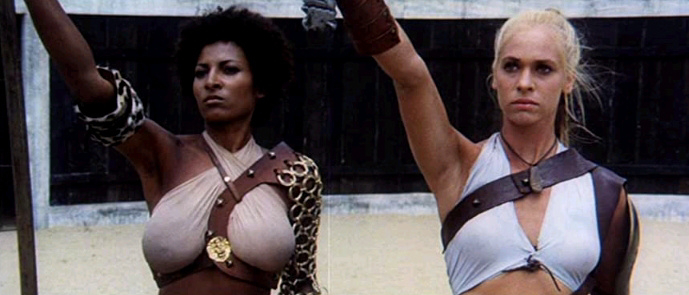
In keeping with the low budgets which Roger demanded for all his projects, we also made the series on financial fumes. Monetary reward was not the driving force for making the series – it felt important to create a permanent record of Roger’s career, told by the man himself, a series of interviews to stand on their own as well as being part of shows which illustrate his work visually. First of all that meant a preliminary breakdown of the films into primary genres. The proposal was for thirteen 30 minute episodes, although as we prepared the scope of the interviews it was obvious that they would need to be hour long pieces. It also meant viewing sessions to hone down the content available and work out the kind of questions and information required. Viewing that amount of R-rated material quickly resulted in blood and boobs seared onto the eyeballs. And to be completely honest, there were a number of films that didn’t even pretend to be good, just product on the conveyor belt.
Yet at the same time, there was much more that had a sense of style and energy, of wit and intelligence, or of pure, brazen enthusiasm. Rough, ready and sometimes wildly inventive. Roger had (and has) an intuitive instinct for raw talent.
In the summer of 2018, we planned an ambitious three month schedule. On first meeting Roger, any worries over the pressures for a (then) 92-year old were wiped away – a fast, determined intelligence, a mind that was equally able to focus on memories or future plans. That’s not to say there weren’t ongoing issues – it was an intense time for all. Yet we ended up with 19 hours of solo sessions with Roger, two and a half hours with Julie, and one hour thirty on a joint interview.
Sometimes there were recollections and stories honed from repetition, but also there was insight, argument and humor. Two particular sessions stood out. The very first was in a sense getting to know each other, yet it was also a discussion on the conflict between women’s roles and exploitation, and the influences on all our lives. A later session examined distribution strategies stretching from the 1950s and thoughts behind appealing to broad audiences beyond the traditional studio system. An independent view on creating films. It also provokes ongoing questions of ethics and taste, and what constitutes entertainment and art, a discussion that remains entirely relevant since the type of product churned out by exploitation film-makers of the 50s and 60s have essentially been consumed within the tentpole movies of today.


Originally called “Corman’s Hollywood”, production on the series became entwined with the edit and continued viewing of films. In fact all the work was done in the Corman offices, using the edit rooms which had serviced so many productions over the years. In addition to a decapitated monster costume in the corridor, Corman’s movies literally surrounded us, ranging from reels to tapes to digital hard drives. We were also able to expand the library through the inclusion of films that had lapsed copyright and were now public domain. It was also important to view the vital productions Roger had made as a director, since episode 13 was to be centered on Roger and Julie’s more personal memories of their movies. Quite apart from being able to luxuriate in the lush Poe adaptations, this allowed us to examine the searing intelligence behind “The Intruder” and the anarchic spirit summed up by “Wild Angels”.
The purpose of the series was not to make claims that Roger Corman’s films need to be revered as classics, either as director, producer or distributor. However, there is not doubting his ongoing status and that the films are a testament to survival and focus in an unforgiving business. The final title of the series became “Cult-Tastic! Tales From The Trenches With Roger And Julie Corman” and includes clips from 124 of Roger’s hundreds of films. As such they also reveal the man himself, a razor-sharp combination of fierce intelligence, polite generosity and determined authority. Nobody else would have released Demme’s “Crazy Mama” in a drive-in double-bill with Bergman’s “Cries And Whispers”.
Nobody else quite encapsulates the craziness and calculation, the brutality and beauty, or the reach and possibilities, of the cinematic from.