Films: July 7 - 13

Kongens nei (The King's Choice) (2016)
Exposed (2016)
Operation Mincemeat (2022)
A Town Like Alice (1956)
Young Adult (2011)
Score! (2017)
The African Queen (1951)
House Of Sand And Fog (2003) 
Haeundae (Tidal Wave) (2009) //

Kongens nei (The King's Choice) (2016) Controlled and persuasively told, cleanly established 1940 German invasion of Norway mirrors national psyche through emotion of royal family. King's central decision is gripping and character psychology moving, highlighted by fine score.

Exposed (2016) Initially intriguing, told with keen visuals, story quickly comes off the rails, lost in confusing emphasis as dour cop Keanu Reeves investigates murder of corrupt colleague. More vital psychology of Ana de Armas, with the mystical and the gritty, messily lost.

Operation Mincemeat (2022) Intrinsic fascination and tension within outlandish World War II plot to fool Germans about Allied invasion, hampered by sprawling, dry style and redundant romantic sub-plot. Nicely detailed, personably performed, sparks of humour pierce stoic British atmosphere.

A Town Like Alice (1956) Told with blunt immediacy and growing tension and despair, Virginia McKenna is among group of women and children forced to walk through Malaya after 1942 Japanese invasion. Emotive and effective, Peter Finch and titular refuge provides hope from suffering.

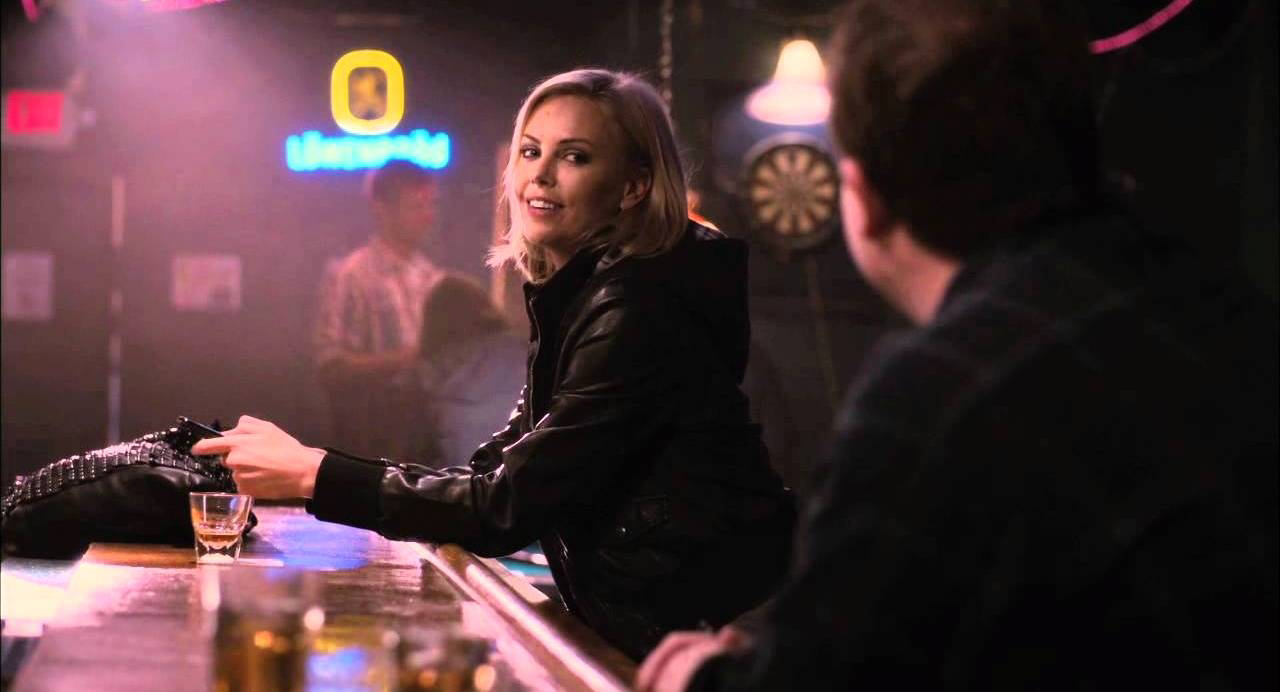
Young Adult (2011) Trading in a tart, cruel sense of character misanthropy, and driven by unrepentant YA author Charlize Theron's return to her hometown, an often funny tale of insular life and self-centered desires. Patton Oswalt sparks twisted memories and alcoholic realities.

Score! (2017) Introduction to history and art of film composition features admirable array of industry interviews even if the view is more narrowly modern Hollywood and rapid pace never allows thoughts to fully develop. Well produced documentary remains engaging, if not rousing.

The African Queen (1951) Set amid luminous, evocative Technicolor jungle settings, bickering love story between unrepentant steamer captain Humphrey Bogart and stubborn missionary Katherine Hepburn is hugely enjoyable adventure. Star chemistry adeptly balances humor and suspense.

House Of Sand And Fog (2003) Immaculately produced and convincingly performed, yet scratchy pacing and structure dampens effect as broken Jennifer Connolly battles to reclaim family home from conflicted Iranian immigrant Ben Kingsley. Tragedy maintains interest without engendering involvement.

Haeundae (Tidal Wave) (2009) Firm production values and blistering action of promised disaster barely compensate for sketchy relationships established in summer coastal city. Some appealing performances, others tend to the hysterical. Tragedy and occasional visuals grab attention.

The Heroes (II): John Mills

John Mills was born at Watts Naval Training School for Boys on 22 February 1908. Spending his early years in this environment, he was therefore well-schooled in naval procedure and it perhaps accounts for the conviction he brought to so many roles about the Senior Service. In fact, his first film character was that of a singing, dancing sailor called Midshipman Golightly in Midshipmaid (1932). After years of training in the theatre, he brought such a sense of authority in front of the camera that it initiated a career which would span more than one hundred and twenty feature credits – in most of them as one of the stars.

But it could all have been so different if he had not displayed enormous courage as a junior schoolboy. For the chirpy confidence that characterizes so many of his later roles in film and theatre was literally being beaten out of him.

Lewis Mills was sent to board at Norwich High School for Boys, after his schoolmaster father had taken a post at a school which he considered unsuitable as a place of learning for his own family. It was at Norwich that Mills met the scourge of so many public schools at that time – the archetypal bully. Mills was small in height and fair of face, which made him the perfect victim for the torment he was to endure for so long. Each night in the dorm, after ‘lights out’, the young sadist would make Mills stand naked in the middle of the dorm holding a jug of cold water on his head, while beating him on the vulnerable parts of his anatomy should he even fractionally lower his arms. As with so many children locked into this kind of nightmare find, it was considered cowardly to ‘snitch’ to the masters and risk the contempt of other classmates. So, Mills decided his only course of action was to try to deal with the matter himself. His sister, Annette, ran a dancing academy at the time, and one of her dancing partners had been a daring First World War pilot. It was to him, whilst on a brief school holiday, that Mills turned and blurted out what he was suffering. The ex-pilot was an expert on ju-jitsu, so Mills couldn’t have chosen a better champion for his cause.

Over a period of several days, the pilot gave Mills a crash course in the martial art and by the time he returned to the school he was to some degree competent. On the night of his return the dreaded moment came when ‘lights out’ was called. The bully began his usual jeering and tormenting, telling Mills to strip off and go through his hour of agony. But this time Mills refused, and the eventful confrontation came about. It staggered everyone in the dorm – including the diminutive Mills, who, although shaking like a leaf, set about the ‘thug’, using the much bigger boy’s superior weight and height to hurl him around the room. Eventually Mills leaped on the dazed bully, locked him in an arm-hold, and nearly succeeded in banging his head through the floorboards.

The bully’s face looked like a squashed tomato when a housemaster finally arrived to break up the fight. There followed a full enquiry, with the outcome seeing the bully expelled. Mills was also reprimanded by the headmaster for brawling, though he also conceded Mills had shown a good deal of pluck. He was, thereafter, a school hero in the true Tom Brown tradition.

Following in the footsteps of so many other major British film stars, Mills was placed under contract with the Rank Organization, and had enormous subsequent success, achieving international status with such films as In Which We Serve (1942), Great Expectations (1946), This Happy Breed (1944), The Way To The Stars (1945), and many, many others. It has often been commented of the irony that it was not as the gutsy hero, the role played to perfection in countless British films, that he won his Oscar, but for the performance as the village idiot in David Lean’s panoramic motion picture Ryan’s Daughter (1969).

Yet this severely underestimates Mills’ skill as an actor and his natural, humanistic ability to reach down to the truth of a character. And often how cleverly he could subvert the stoic stereotype. As early as the 1941 Anthony Asquith production Cottage To Let, Alastair Sim discovers Mills is actually a Nazi spy, unmasked by a young Cockney evacuee, played by George Cole. With The October Man (1946), Mills is suspected to be a murderer due to his mental instability and memory loss, while even in the fondly remembered and grittily produced Ice Cold In Alex (1958), there is a vulnerability and tension to his sense of failure and needed reclamation of heroism.

Even through his seventies and eighties, Mills remained active, playing demanding roles in the theatre and on television, and character parts in films. From his early childhood, when he had to prove to himself that the disadvantages of being small in height did not mean that he was also small in terms of courage, John Mills continued to shine as one of Britain’s best loved and most admired stars. This was confirmed when he received the ultimate accolade for a British actor – on 28 July 1976, Mr. John Mills became Sir John Mills.

As a personal aside, we worked with John for several years on the series Best Of British. When the first season of ten episodes was agreed with Barry Brown, Head Of Purchased Programmes at the BBC, it was a genuine thrill to secure John’s talents as narrator. During the first recording sessions, however, we were apprehensive since the narration we’d written covered many of his own films. We needn’t have worried; he was a generous collaborator and was genuinely pleased to celebrate British films from the 1930s to the 1970s. He respected our scripts, while at the same time making judicious suggestions.

We ended up recording fifty-seven episodes with John, sharing stories of family and healthy living – he was already ready to recommend a new diet – and of course discussing future projects. The consummate pro, he would always end with a reminder to think of him for any prospective future role. After all he was a working actor, claiming the insecurity of not knowing where the next cheque was going to come from along with the giddy thrill of creating another character.

Making The First All Digital Film - Part II: (Pre) Pre-Production

The art of film can refer just as often to the skill of knitting together the people and finance needed for a production as it does to the themes and ideas which a confusion of different talents, with their often-divergent views, bring to the screen. It’s been eternally claimed how much of a miracle is required for a film to be made, let alone ending up with something moderately entertaining or provoking. The industry devours so much cash that even low budget endeavours consume the efforts of an army of technicians, let alone the invisible amounts which evaporate through legal, insurance and years of development.

Of course, when you make an independent, international, treaty co-production you multiply the difficulties times ten!

One of the pleasures in traveling the world making movies is the cultures and individuals you work with, which are always a challenge and learning experience. The emphasis here is on working together. As writer / producers we approach every project with a distinct sense of authority as creators and manipulators - until reality smacks us and compromise becomes the key.

On Rainbow this originally saw production and financing designed as a UK / Canada / Germany co-production with all the subsequent national content and spend requirements to be faced - a series of governmental hoops to be jumped through which are seldom based on creative benefits. It often creates a bizarre series of abortive relationships which are only resolved by financial necessity.

That means story discussions turn out to be interesting.

Our film's narrative is kicked into gear when the young hero finds the end of the rainbow. One of the original partners suggested that perhaps the rainbow hides from Mikey, darting behind buildings in some elaborate show of hide and seek. Another idea posited was the audience never actually sees the rainbow, leaving it the imagination, a harsher approach that could reduce the budget. Both proposals were met with our stony silence.

Initially, financial necessity saw us develop the project out of Ealing Studios, a famous British institution and home to classic movies during the 1940s and 50s. As part of its survival in 1993, the stages and offices had been purchased by supplies company BBRK. A new direction and lease of life promised. We should have known there’d be trouble when the incompetent people at the helm pursued not the refurbishment of threadbare sound stages but a rebuilding of the main bar.

There was certainly generosity in the long, boozy lunches, yet very little in the way of business vision. Instead, hawks preyed on amateurism. Investment promised to us and deals to use the facilities never materialized.

However, during the stifling heat of the summer of 1994 it did become a base to bring together the creative team for “Rainbow” to discuss story and technology - and how we were going to conjure dreams into reality. Director / star Bob Hoskins, DP Freddie Francis and designer David L. Snyder were among those gathered to pick apart the art and mechanics as well as to interrogate Sony’s digital guru John Galt who we flew in from Los Angeles. Apart from the joy of simply talking ideas (what sweeter period can there be without the weight of physical and financial limitations), there was also the chance to work on storyboards and test the capabilities of the HD camera. A major debate was how to actually create a rainbow. It would be a discussion and struggle that would last even beyond the reshoots in California months after the shoot. In the meantime, we managed to visit a company specializing in laser displays and filmed a multi-coloured corridor of light, which eventually did become an element in the final visual effects. We also had the rather extraordinary experience of the Ealing special effects department proposing to use a miniature rainbow they had physically constructed and incorporate it with the location shoot in Montreal. It was the kind of bone-headed suggestion that summed up the decline at the facility and a potent sign that it was time to move on.

Apart from the well-stocked bar, the Ealing cafeteria was expansive and the food decent. Unfortunately, we also discovered that nearly everyone on the lot had been using the ‘rainbow’ account even if they had nothing to do with us. We had a fight over the bill. It was a shame. The initial plan was to shoot interiors on the fabled stages. In March of 1994, our long-running series Best Of British had finally ended its run on BBC1, a seven-year, sixty-seven episode look at the British film history between the 1930s and 80s. So, we knew all about the glories of Ealing’s past and it would have been a romantic ideal to reinvigorate the place with new technology and new ideas. A few months after we left, Ealing Studios imploded under debt and mismanagement. The individuals escaped. The lot needed to be rescued once again.

After so many sweating weeks in the art department, it was time to go to Canada, where the co-production had been ultimately established. Strangely enough, as a creative team, discussion over the digital technology we were about to pioneer was only about how it would benefit production. Freddie Francis was giddy with the potential. Most were genuinely enthused, although the camera operator was nearing hostility. There were bigger problems of course, in particular that finance was rapidly falling away with our German co-producer failing spectacularly to deliver and the Ealing connection crashing.

With any evolving narrative, however, there’s always a background or a flashback to provide a way forward. In our case, it was provided by Marie Vine at the Cannes Film Festival in May. It always helps to have a sales agent who’s a genuine fan, who believes in a project as much as making the deals. The promotion was good, the sales spiel was even better and there was a script which received a positive reaction. There was even a live Q&A with Bob Hoskins beamed into a reception room at the Majestic Hotel for assembled buyers and journalists. Of course, that particular event suffered a customary technical blowout (a loss of picture, even as sound continued) that was eventually traced to a waiter tripping over a power cord and dislodging the plug from the wall socket!

Despite industry scepticism (especially from the U.S.), the end result from a few hectic days was a robust series of distributor sales and a bidding war between British companies that was resolved by a midnight meeting where we were questioned about the centrepiece rainbow ride. We had to ramp up our best pitch, though it’s always helpful when your audience wants to be convinced. By the early hours, we had a rich deal with First Independent that was an important foundation to financing the film, not just the money itself but the sense of confidence it gave everyone.

The Ealing art department had provided a solid base to spin fantasies. In fact, all movie art departments conjure up a relaxed, open atmosphere, although the result in this case was yet another re-write on the script. (Of course, whether it’s approached as a blessing or a curse, the evolving state of a screenplay provokes re-writes throughout production, even pushing into post-production.) Right now, however, in the height of summer, the schedule dictated for us to decamp to Montreal, storyboards and dreams still intact. The vital work of pre-production was about to commence, the real battles of creativity and finance ready to clash.

It was also time to prove digital filmmaking was a reality.

The Heroes (I): Intro & Stewart Granger

From Tom Brown to Bulldog Drummond, from Biggles to Bond, the 20th Century British hero was represented as schoolboy, sleuth, soldier, sailor, sky-pilot and spy, with film providing a handsome tribute to them all. And the actors who played such heroic figures also came in assorted shapes and sizes.

There was the romantic variety, epitomized by the likes of Stewart Granger, Anthony Steele, Michael Redgrave and Dirk Bogarde. There were the tough and gritty, like Jack Hawkins, John Gregson and Peter Finch. And there were those who didn’t fit into either category, but who nevertheless could play heroic roles with utter conviction – spicing up their parts with charm, like Leslie Howard and Robert Donat, or with gutsiness like John Mills and Richard Attenborough, or even with tongue-in-cheek humour like David Niven and Kenneth More.

From the late 1930s through the early 1960s, these men reigned supreme and were Britain’s top box-office stars. Yet their introductions into the film industry were as widely divergent as the roles they played and sometimes the heroic roles they portrayed on film were no match for the personal heroism demonstrated in their offscreen lives.

Stewart Granger’s real name was James Stewart, but obviously that name was already claimed in Hollywood when he began to make a career in British films. He was born in the Old Brompton Road, London, on 6 May, 1913, the son of a Scottish Army officer. His mother was a famous beauty and the daughter of actress Jane Emmerson, who had been a member of the legendary actor Henry Irving’s company.

Granger originally had ambitions to become a doctor, but his family, living on his father’s small pension, could not afford to send him through medical school. Instead, he joined a repertory company as a juvenile lead and went on to distinguish himself as leading man in the respected Birmingham Repertory Company. He began in films as an extra, and coincidentally started on the same day as another actor who was to remain his ‘best pal’, Michael Wilding. Both had taken up this somewhat odd occupation for the same reason: ‘because you got a guinea a day, and the best crumpet in the world!’ Granger admitted that he had no ambition to become a serious film actor, let alone a star. He was in the business just for the fun.

After making two uneventful films, Granger was cast in a costume drama that would establish him as one of the great romantic leads of wartime and immediate post-war British cinema. It was a film made by the Gainsborough Studios and called The Man In Grey (1943). It was originally intended for Robert Donat, but he was busy on another picture, and in fact it was he who recommended Granger to director, Leslie Arliss. In one scene, Granger had to slap Margaret Lockwood across the face. It required multiple retakes, as he just couldn’t bring himself to hit her hard enough. Lockwood kept encouraging him, and eventually he forgot his good breeding and the fact he’d been an officer in the Gordon Highlanders, as well as a very useful amateur boxer, and gave her a resounding slap. It nearly knocked her cold but nursing a swollen jaw, she gave a ‘thumbs up’ sign, while Arliss gleefully shouted ‘Print it’.

It was this scene, more than anything else in the film, that female cinemagoers responded to, and made Granger an overnight star. He was quickly placed under contract to Rank and made a succession of highly successful films, such as Love Story (1944), Fanny By Gaslight (1944), Madonna Of The Seven Moons (1945), Caravan (1946) and Waterloo Road (1945). In the last two, Granger was asked to make use of his prowess in the ring for fight sequences. In fact, all the fights and stunts he did, he rarely used a stuntman or double, preferring in the cause of realism to take the knocks, falls and bruises. He gives a splendidly skilful display of pugilistic ability in Caravan, though the story in Waterloo Road necessitates less success, when he plays the part of a wartime spiv who is pursuing Joy Shelton, wife of soldier John Mills. Mills goes AWOL with the sole intention of giving Granger a thrashing. Even today, their confrontation remains persuasive. Coordinated by Dave Crowley, who was an ex-lightweight champion of Great Britain, the sequence was rehearsed between Granger and Mills – also a very handy boxer – for a week before shooting. For a rare change, Granger had to lose the fight, but privately he admitted to hating it.

A few years later, when his star status took him to California, Granger had a real-life and much more ‘sinister’ fight, which could easily have destroyed his career. At the time he was married to Jean Simmons, and she too had decided that Hollywood was the city where she could attain international celebrity. Howard Hughes, one of the richest men on earth and also one of the most powerful in the US film industry, had secretly bought up Jean Simmons’ contract from Rank, and was now pressurizing her to sign a long-term contract with him. Both Simmons and Granger were adamantly opposed, believing such agreements did much more harm than good by limiting an actor’s choice of roles.

Hughes used his money and legal muscle to prove she had already entered a ‘moral’ contract, but Granger, acting on her behalf; and against everyone’s advice that he risked never working in the business again, took Hughes to court. It created worldwide interest – in one outburst from the witness box, Granger exploded that Hughes’s case had nothing to do with ‘moral contracts’ or the studio he owned – it was purely that Hughes wanted to ‘screw my wife’! Granger was naturally ticked off by the judge for using emotive, colourful language, but in a toned-down version it still captured all the headlines, and amazingly Hughes backed out of appearing in the court. The claim was withdrawn. Against overwhelming odds, Granger had won. It was a true-life scenario with more heroic qualities than any he had played on the screen.

Making The First All Digital Film - Part I: Beginnings

Rainbow originated more than a decade before filming finally commenced in September 1994. The initial idea came from our general fascination with the physical wonder of rainbows and how they appear as both an antidote to and a symbol of nature’s power across the world, whatever the country or culture.

Our concept was to involve human interaction within a fantasy setting and then create a family adventure. At the same time there was opportunity for an ecological slant to the tale, not something to sledgehammer the audience over the head with, but a comment on the dangers of messing with nature.
The first treatments proposed a stylistic and genre mashup that fused Spielberg fantasy with Carpenter horror, something like E.T. The Extra-Terrestrial meets Halloween: kids steal gold from within a rainbow, gold which powers the rainbow and in turns gives colour to the world - not only does this mean that the world rapidly drains of colour and is plunged into darkness, but vengeful phantoms (rainbow protectors) hunt down the kids and will kill anything that gets in the way of retrieving the stolen gold.

The actual essence of the story never changed, except the killer phantoms were dropped and the ecological background strengthened. Based on a lack of photosynthesis, oxygen starts to evaporate and as the earth loses colour and dies, society breaks down - the only chance left is for the kids to return the gold and bring back normality.

In 1993 Bob Hoskins joined the film as director. Producer and co-writer Robert Sidaway approached Bob’s agent after seeing The Raggedy Rawney, a gritty drama centred on Gypsy life and family bonds. Forty-eight hours after sending the script, a meeting was set to meet Bob in Wolfe’s Wine Bar in Great Queen Street, just down from our Winchester Pictures office at the time. He was full of enthusiasm and eager to become a part of the project. Of equal significance, and an aspect he pushed from the very start, was a suggestion to shoot in Sony High Definition.

Bob had recent first-hand experience of the system when starring in the miniseries When Lions Roar. Without an extravagant studio budget, he felt this could provide a viable way to make the film, considering the large number of visual effects anticipated and the colour manipulation required for the apocalyptical scenes in the third act, when the screen bleeds of colour. It summed up the dichotomy of Bob so well – at once a archetypal everyman, responding to the emotion of the story and next the ambitious thinker, exploring new tools to create the story.

It was the start of long journey.

A journey that from the outset was fraught with risk. The first was a meeting with Sony to talk through the project and discuss the feasibility of making a digital film which could be released theatrically. The second was to find a DP with the courage to take on the associated challenges. And the third was facing the scepticism of industry partners. Actually, forget about scepticism, more like outright ridicule and hostility.

In 1993 nothing could replace the practical and aesthetical pleasures of celluloid. To be honest, it wasn’t as if we totally believed in it at the start, despite meetings with the Sony reps in Basingstoke and their enthusiasm to be involved.

Most difficult of all at this initial stage was securing a DP. Strangely enough, younger cinematographers, who we thought would be more receptive to experimenting with fresh ideas, were the most resistant to take on new technology. Deam Semler was approached but was already booked (although his wife sent us the most unique of good luck messages, with illustrations!) and John A. Alonzo was a suggestion after he had photographed When Lions Roar. But because we were setting up as a UK / Canada co-production, talent was needed from the respective countries.

As is often the case, the solution came by chance. In the Sussex Cricketer pub (sadly now demolished) beside Hove Cricket Ground, an accountant acquaintance told us he was working on the books for a certain Freddie Francis. Double-Oscar winner for Sons And Lovers (black and white) and Glory (colour). A career encompassing classic films in Britain and the U.S. as well as notable visual experimentation as a director of horror films in the 60s and 70s.

But what were the chances he’d be interested in our film?

The answer was an immediate yes and a key member of the creative team was secure. Even more surprising, Freddie leapt at the chance of exploring HD and the digital potential, seeing it as another part of the cinematographic toolbox, an exciting marriage of the technological and the creative. The way of the future.

So now we were truly set. For better or worse, the digital adventure was about to commence.

Films: October 12 - 18

De uskyldige (The Innocents) (2021)  Windtalkers (2002)  The Florida Project (2017)  It Should Happen To You (1954)  Good Luck, Have Fun...